
Angela Merkel wants economic government after all – her way – By Daniela Weingärtner
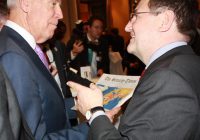
Harmonization, German Finance Minister Wolfgang Schäuble said recently in Brussels, is related to harmony and is therefore a very positive word. So who could have anything against coordinating the European economies more closely?
That may sound friendly and soothing, but it will have caused a lot of trouble in Europe. The Germans, who have long resisted a European “economic government,” have now decided it is exactly what they must have – but according to their own rules. There are few details so far although the matter is due to be decided at the European Union summit at the end of March.
|
|
Read more...
|
|
|
 Gaddafi’s not ready to leave: Libyan anti-government protesters waving a pre-regime Libyan flag in the city of Zintan.
The lesson for the West is that democracy trumps stability – By Theo Sommer
The winds of change are buffeting the Arab world. Two decades after the fall of the Berlin Wall and the collapse of the Soviet empire, another historic revolution is upending the familiar order of a whole region. From the Atlantic coast of Morocco to the shores of Oman, the Arab street is rising against oppressive and corrupt regimes. A new world is coming into being in what the West used to call the Orient.
The spark of insurrection, struck on Dec. 17, 2010, by the self-immolation of a Tunisian fruit hawker, quickly spread to Egypt, where Hosni Mubarak soon followed Ben Ali into political oblivion. But that was not the end of it. Street protests rippled through Algeria and Morocco, shook up Palestine and Yemen, Kuwait and Bahrain and, with explosive force, Gaddafi’s Libya.
|
|
Read more...
|
|
|
 Walk of shame: Guttenberg on his way to announce his resignation to the media in the Defense Ministry building.
The German Defense Minister is defeated by allegations of plagiarism in his doctoral thesis – By Lutz Lichtenberger
The final act in the political rise and fall of Karl-Theodor zu Guttenberg was like a scene from a movie. The minister strode purposefully down the broad steps of the defense ministry building toward the atrium.
Gone was the usual aura of confidence as he announced his resignation from all his political offices to the waiting press corps.
Within the space of two weeks, the rising young star of German politics, the Baron who seemed so different from all the other grey, characterless pols, the man described as a future chancellor, had become just another ex-minister leaving office in disgrace.
February 18: the defense minister had just returned from visiting Bundeswehr troops on active duty in Afghanistan. Chancellor Angela Merkel needs to see him urgently.
|
|
Read more...
|
|
|
Thomas de Maizière is the new German Defense Minister
Karl-Theodor zu Guttenberg’s party, the Bavarian Christian Social
Union (CSU), decided not to nominate a candidate to replace their
resigned colleague. Instead, Chancellor Angela Merkel chose Thomas de
Maizière from her own Christian Democratic Union. De Maizière, a former
aide and close political ally of Merkel’s moves from his post as federal
interior minister. He is widely respected in political Berlin. Even
Sigmar Gabriel, leader of the main opposition party, the Social
Democrats, called de Maizière “one of the best cabinet members.”
The 53-year-old lawyer faces significant challenges. In his resignation
speech, Guttenberg said he was leaving behind a ministry “in good order”
but few experts share that assessment. The government has decided to
end conscription and turn the Bundeswehr into an all-professional army,
reducing troop numbers from 250,000 to a maximum of 185,000. There will
be corresponding cuts to civilian personnel, with overall defense
spending levels falling by €8.3 billion within four years. But so far,
no detailed plans have been agreed on how to implement these goals,
although a concept has been drawn up and a draft bill presented to
parliament.
|
|
Read more...
|
|
The revolution is over – now what? – By Jabeen Bhatti
There is a colorful and varied batch of protest signs on the streets of central Tunis these days, held by small bands of protesters making their regular daily appearance: “The interim government must go,” say some. “Give the new government a chance,” read others. “Hurrah for people power,” is what underscores them all.
Almost two months after winning their liberty, no one in Tunisia can stop talking – or protesting. After decades of being forced to stay quiet, this specific liberty is particularly intoxicating. And since Tunisians forced President Zinedine Ben Ali to flee and sparked revolutions across the Arab world, Tunisia is full of hope and uncertainty, and a little bit of turmoil – a situation similar to Egypt these days and likely to follow in Libya and elsewhere.
|
|
Read more...
|
|
|
 Next step Berlin? Hamburg’s new mayor Olaf Scholz.
The SPD wins an absolute majority in the Hanseatic port city
After 10 bleak years in the opposition in the northern city-state of Hamburg, the Social Democrats won a landslide election victory in regional elections on Feb. 20. Their lead candidate Olaf Scholz is set to govern without help from any of the other four parties in the city’s legislature.
The Hamburg vote was a big confidence-builder for the SPD during a year that will see a further six regional elections in Germany. Both national party leader Sigmar Gabriel and Klaus Wowereit, mayor of Berlin and a major SPD presence in his own right, hailed Scholz for adopting a credible, business-friendly stance without neglecting social responsibility. Perhaps the clearest proof of the SPD’s warmer ties with business is Hamburg’s economy minister-in-waiting Frank Horch, a leader in the local chamber of commerce.
|
|
Read more...
|
|
|
 After much debate, the Weinheim Muslims were allowed to build their minaret.
A southwest German town is a microcosm of the integration debate – By Ruediger Rossig
The towers of two castles hover over the half-timbered houses of the picturesque town of Weinheim in northwest Baden-Württemberg. And, more recently, so too does a narrow, white, round tower with a pointed roof.
When the Türkiyem Mevlana Mosque erected its 25-meter-high minaret last year, many locals in the 43,000-population town also raised a warning forefinger. The dome-roofed Muslim house of worship at the edge of the northern part of Weinheim was completed eight years ago.
The neighborhood was built to house local factory workers in the late 19th and early 20th century. During that period, many Catholics left the valleys of the nearby Odenwald region for Protestant Weinheim. After 1945, displaced Germans from the eastern territories as well as refugees from communist East Germany also moved here.
Then the West German economic miracle brought the first “guest workers” from Italy, Spain, Greece, Yugoslavia – and Turkey. Many brought their families but the Turks also brought a new religion.
In 1976 the Turkish-Islamic Association in Weinheim was founded. “We prayed in different rooms, most recently in a former factory,” said its chairman Ishak Ünal. “But of course we always wanted a proper mosque.”
|
|
Read more...
|
|
|
The Federal Republic is training its own moderate, Enlightenment-friendly Islamic clergy – By Paul Hockenos
In the courtyard of the Şehitlik Mosque, Berlin’s largest Islamic prayer house, the resident imam, Mustafa Aydin, is a Turkish civil servant on a four-year posting abroad. Many of the Islamic preachers in Germany, where the Muslim community is overwhelmingly of Turkish heritage, have similar status.
Aydin understands basic German, but he communicates with me through an interpreter. In a Germany struggling to come to grips with its four-million-strong Muslim population (about 5 percent of the populace), the use of imams sent from Turkey and other foreign countries has come under sustained fire from integration-minded critics.
|
|
Read more...
|
|
|
 Rejected: Berlin doesn’t want a Ronald-Reagan-Street.
By Nurhan Kocaoglu
Germany is divided once more. A poll conducted by the newsweekly Focus in early February showed 52 percent opposed to naming a street in Berlin after the late US President Ronald Reagan. But a significant minority – 42 percent – favor the idea.
The German capital has long since named a square, a school and a museum after John F. Kennedy. With his 1963 “Ich bin ein Berliner” speech he won the hearts of Berliners for all time. But Reagan’s 1987 exhortation – “Mr Gorbachev, tear down this wall!” – is dividing the city he worked to reunite.
|
|
Read more...
|
|
The rich get richer, the poor don’t – By Peter H. Koepf
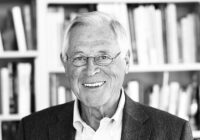
A book hit the German market in February that nearly a million people in France have already bought. “Be outraged!” demanded 93-year-old Stéphane Hessel, one of 12 authors of the Universal Declaration of Human Rights, especially of the younger generation.
“Indignez-vous!” denounces the steady erosion of social welfare and the ever-widening gulf between the rich and poor. He laments the failure of politicians, who have abandoned us, exposed us to the “dictatorship of financial markets, which have gone so far as to threaten peace and democracy.” He decries the “power of money,” which today is “greater, more arrogant, more egotistical” than ever before. “It is high time,” Hessel warns, “that ethics, justice, and sustainable balance become our priorities.”
|
|
Read more...
|
|
Why tourism is vital for the successful outcome of the reform process – By Michael Winckler
There were only two free seats on the Air Berlin flight from Düsseldorf to the Egyptian Red Sea resort of Hurghada on Sunday, Feb. 27. The vast majority of passengers on board the 173-seat Airbus A320 were tourists on package deals. Attracted by the bargain prices on offer from major tour operators, they were the first holidaymakers to have booked a trip to Egypt following the weeks of protests against ousted President Hosni Mubarak.
In the high season, Hurghada is normally bustling with close to 80,000 tourists every day. Now there are currently only 2,000 vacationers at best, according to Stefan Suska, the spokesman for Alltours, fourth largest German tour operator.
|
|
Read more...
|
|
White farmers from South Africa want to leave their country and settle in Georgia – By Andrea Jeska
South Africa’s white farmers could soon become Caucasian. Boer winegrowers and farmers are considering leaving their home country for Georgia to start a new life. The South African media is already talking of a possible exodus of the descendents of Dutch settlers – and not many seem sorry to see them go. South Africa has its place in the world market so no one need to be alarmed over the news of the departure of white farmers, a government statement said.
Georgia on the other hand is bending over backwards to woo the Boers, who have lots of technological know how, farming experience and capital, to their country. The government in Tblisi recently invited a 15-strong South African delegation to visit the country. The group produced a10-page analysis, which though containing some critical aspects, was on the whole positive.
|
|
Read more...
|
|
|