
June 2011 Business
The energy revolution in Germany can be a model for others Print E-mail

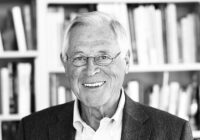
Stephan Kohler is the Chief Executive of Deutsche Energie-Agentur GmbH (dena), the German Energy Agency.

An intelligent exit from nuclear energy is possible and would be instructive, says dena chief Stephan Kohler

The German Times: Following the Fukushima nuclear disaster, Germany was notable for the scrutiny it applied to its energy policy. How are we to understand this?

Stephan Kohler: The critical approach toward nuclear power in Germany goes back to the 1950s and 1960s, when there was a strong movement against nuclear armament. In the 1970s and 1980s it turned into a movement against nuclear power for civilian use. We have had an intense debate over the risks of nuclear energy since the 1970s – and at the same time a lively discussion about the alternatives. Back in 1980, the Institute for Applied Ecology in Freiburg published its energy revolution study, so for 30 years there have been scenarios of how we can organize energy supplies without nuclear power.


Read more...
 
Germany draws conclusions Print E-mail

Nuclear power plants

A new national energy consensus for the post-Fukushima world – By Kevin Lynch

It is no exaggeration to say that, outside of Japan, the effects of the Fukushima nuclear disaster have been felt most strongly 9,000 kilometers away in Germany. On the government’s official website, bundesregierung.de, the most prominent link at the moment is “Japan and the consequences.”

Click on it, and a drop-down menu opens with the following options: Travel; Food and Imports; Radiation Protection; The Economy. There is information on every conceivable way in which Fukushima could impact Germany. Also prominently displayed are the numbers of two “citizen telephones,” hotlines to the environment ministry and to the foreign ministry, which concerned Germans, at home or abroad, can ring for advice.

Read more...
 
Big money for big farmers? Print E-mail

Haggling over EU agricultural subsidies – By Wolfgang Mulke

Using Google Earth, you have no trouble recognizing the border between the former East and the former West Germany – even now, 20 years after it disappeared from political maps. The differing shapes of the agricultural areas are a dead giveaway. The east is dominated by vast swathes of acreage, the remains of giant Communist-era agricultural combines. The west is a patchwork of small farms. Both forms of farming have survived in reunified Germany and, looking down from space at the Elbe River that divides them, the difference is clear to see.

Read more...
 
Overexploited Print E-mail

 Tuna nigiri – stocks of the fish are severely depleted in European and Mediterranean waters.
Tuna nigiri – stocks of the fish are severely depleted in European and Mediterranean waters.

Too few fish, too many fishermen – Europe plans to change its fishing quotas – By Ulrike Fokken

Everyone likes fish. The Spaniards consume 43 kilograms per person each year; the Japanese 30 kilos; Germans eat an average 17 kilos of fish annually. But the Baltic and North Seas off Germany do not produce enough to satisfy that appetite. And Spaniards currently consume around four times more than the fish stocks in the waters off their Atlantic and Mediterranean coasts.

Two-thirds of the fish consumed in Europe are imported from Africa, Asia and America. According to the UN’s Food and Agriculture Organization, 85 percent of the world’s known fish stocks are either “fully exploited or overexploited.”

Read more...
 
Nuclear Iron Curtain Print E-mail

The EU’s East continues to see atomic energy as a valuable option – By Luboš Palata

Europe is facing a new division – the Nuclear Curtain. The issue of nuclear energy fundamentally separates Germany and Austria on the one side from the new members of the European Union in East-Central Europe on the other.

Germany’s Fukushima-boosted exodus from nuclear energy represents a much more serious problem for Czechs, Hungarians, Poles, Slovaks and Slovenians than the Austrian “antinuclear hysteria,” with which they have long learned to live. One would think it should be the other way around.

Read more...
 
Nuclear forward defense Print E-mail

France still considers reactor power vital to the national interest – By Rudolf Balmer, Paris

In the wake of events at Fukushima, several European countries have called a moratorium on nuclear energy. France is not one of them. On the contrary. Environmental parties somewhat hesitantly put out a call for a referendum on partially abandoning nuclear power and even that went almost unheeded.

France gets almost 80 percent of its electricity from its 58 nuclear reactors. The country’s state-owned nuclear energy industry leads the world in building nuclear plants and re-processing nuclear fuel rods.

Read more...
 
Hubris and hybrids Print E-mail

On the way to becoming the biggest car manufacturer in the world? Daimler and GM failed. Will VW succeed?

Volkswagen is growing but ill-equipped for the future – By Hannes Koch

About a year ago, Volks­wagen CEO Martin Winterkorn made some big promises: By 2018, he claimed, the German company would produce more vehicles than any other car manufacturer in the world. In addition, VW would earn more than comparable companies, according to Winterkorn.

VW could indeed reach these goals. But the company is still far from well equipped for the future. It suffers from the autocratic leadership of its most important shareholder, Ferdinand Piëch, and lags behind in developing electric cars.

Read more...
 
Home
Politics
Business
Life
Archive
Contact & Comments
Legal Disclosure
Privacy Statement


Our Advertising Clients: