
February 2011 Life
African music, Russian soul, German label Print E-mail

Sergey “Efr” Efremenko (top) and Markscheider Kunst have been significantly influenced by their former singer Selenge from the Congo (bottom).

From blues to soukous to merengue: Markscheider Kunst from Saint Petersburg mixes African music styles – By Ruediger Rossig

Fantastic,” Armin Siebert bursts out when asked about Markscheider Kunst. “They are the best musicians in all of Russia,” said the knowledgeable owner of the Berlin-based record label Eastblok Music. His company, which specializes in music from Eastern Europe, released the Saint Petersburg group’s 10th album last year.

But when you think about it, the sound of Markscheider Kunst has about as much to do with Eastern European music as herrings do with bananas. The nine Russians are not polka musicians; instead they focus on African, Latin American and black music.

“From the get go, Markscheider Kunst has been on the list of bands with whom we really wanted to work,” said Sieber. “And after many concerts over the years, they’ve built up a loyal following in Germany that we can rely on.”

Read more...
 
‘Germany’s most beautiful town’ Print E-mail

History at every turn in Görlitz: The old town bridge with St. Peters Church (top), the Dicker Turm (left) and a view of the Traitor Lane.

In Görlitz, European history leaps out at every corner – By Lisa Ellis

For newcomers, the first sight of the eastern German town of Görlitz can come as a surprise. The last thing you are prepared for after the drab socialist housing and derelict factories of the outskirts is the jaw-dropping grandeur of the Old Town.

Having suffered virtually no damage during World War II, Görlitz has one of the best preserved historical centers not just in Germany but in Central Europe, with buildings and monuments dating back six centuries.

Standing in the middle of such splendor, it is difficult to believe that just 20 years ago, before German reunification, Görlitz was on the verge of ruin. Most of its old buildings were crumbling and its people were leaving in droves for the West. As one lifelong resident said, “it felt like a town with no future.”

Two decades later, Görlitz is in the process of reinventing itself. The center has been largely restored thanks to a massive influx of public and private money and the town is fast turning into one of Germany’s most talked-about tourist destinations. Unusually for an eastern German town, it has also become home to a significant community of Germans retirees from the west, attracted by its low cost of living and attractive center.

Read more...
 
The road home Print E-mail

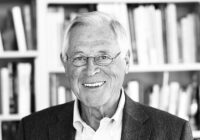
Celebrated actor, painter, musician and writer Armin Müller-Stahl is honored at this year’s Berlinale – By Nurhan Kocaoglu

Who can forget the comic but hapless cab driver in New York City? The one who can't handle an automatic transmission and allows his passengers drive his cab in Jim Jarmusch's “Night on Earth.” Armin Mueller-Stahl played the East German immigrant Helmut, a former clown who tries hard to understand his new cultural surrounding and fit in, with touching restraint. In some ways, the role reflected his own experiences of picking up and starting over again in a new and completely different environment. Such tragic-comedic roles, he says, he would have liked to play more often. “Those are the roles I play the best,” he recently told Deutschland-Radio Kultur.

Another unforgettable role is that of the controlling father with zero tolerance for failure who through his tough love contributes to the mental breakdown of his pianist son in “Shine.” Müller-Stahl was nominated for an Oscar as best supporting actor for that role. With an acting career spanning 50 years, though, Müller-Stahl, who just turned 80, has played a broad range of characters.

Read more...
 
Berlin’s Walk of Fame Print E-mail

Image

The Boulevard of Stars pays tribute to the outstanding artists of German cinema – By Klaus Grimberg

Stars and starlets of the international film industry are currently moving along the red carpet in front of the Berlinale-Palast again. During the 61st Berlin Film Festival, the place to be is at the lit-up route crowded with fans and journalists on the sides. The excitement lasts 10 days – and then? Film enthusiasts only need to go one street over: There on the Boulevard of Stars, the red carpet is rolled out all year long.

On the median of the venerable Potsdamer Strasse, the tribute to German actors and filmmakers is new.  Inspired by the Walk of Fame in Los Angeles, actors but also directors, producers, cameramen and writers are honored with a star on the red-colored sidewalk.

“We are striving for a selection, which reflects the teamwork in cinema and doesn‘t only focus on the actors in front of the camera,” said Georgia Tornow, spokesman for the initiative. Forty stars have been laid since its inauguration, and another 10 to 20 are to be added annually.

Read more...
 
Life on high Print E-mail

A family from Saxony calls a church tower home – By Matthias Pankau

The massive stone St. Anne’s church in the Saxon mountain village of Annaberg-Buchholz is visible from miles away. It rises about 80 meters and sits in the heart of the Erzgebirge region, giving visitors a stunning view of the surroundings and the horizon.

Matthias, Marit and Toni Melzer enjoy the view every day – after all, they live in the tower. The Melzers are “Türmer,” the German word for people who guard the tower. They are Europe’s last remaining “tower family” and live year round high above the earth.

Read more...
 
Germany through my eyes Print E-mail

Image

By Ahmet Külahci, German correspondent for the Turkish daily Hürriyet

In Turkey, we were raised with tales about the traditional German-Turkish friendship.

We were raised with tales about the German-Turkish brotherhood in arms.

And we were raised with tales about the Germans, who within a short period, made a modern industrial country out of the ashes of the Second World War.

We were taught that the most important virtues of Germans are discipline, punctuality, diligence and creativity. And of course, that “Made in Germany” stands for quality. Similarly, through visiting acquaintances who had left for Germany after the 1961 labor force agreement between the two countries, I only heard good things about Germany and Germans.

Read more...
 
East German cuisine Print E-mail

The mural, “In Praise of Communism,” sets the scene for fine class-conscious dining.

Meager-meal classics celebrate a culinary comeback in a new GDR-style restaurant in Berlin – By Jan Kepp

Those familiar with the GDR will certainly remember Ketwurst or Grilletta. These neologisms were invented in the 1970s by the East German gastronomical research institute, Rationalisierungs- und Forschungszentrum Gaststätten. In spite of the inventive names, a Ketwurst was just the East German version of a hot dog and a Grilletta a hamburger. But as Anglicisms were not allowed in the socialist state, the gastronomical bureaucrats came up with new German names.

Ketwursts and Grillettas disappeared from menus in restaurants and canteens after the fall of the Berlin Wall. But these days, they are celebrating a culinary comeback in the heart of Berlin: The newly opened GDR-style restaurant Domklause is offering them and other socialist culinary classics.

Read more...
 
A puzzle from ancient times Print E-mail

Then and now: The large relief with the picture of a lion as it was exhibited in the 1930s in the Tell Halaf Museum (top) and after the restoration of 900 fragments (middle). Max von Oppenheim next to his favorite figure „goddess on a throne.“(bottom)

“The Tell Halaf Adventure” on show in Berlin is the fruits of nine years’ reconstruction work – By Klaus Grimberg

It was like a huge puzzle dating from the antiquity, 27,000 fragments of basalt left to languish for decades in the vaults of the Pergamon Museum in Berlin. The 3,000-year-old pieces were rediscovered in the early 1990s, the remains of the legendary collection amassed in what is today northeast Syria by the adventurer, ethnologist and archeologist Max Freiherr von Oppenheim in the early 20th century.
Oppenheim, the son of a prominent Cologne banker, made an outstanding contribution to archeological research at the turn of the 19th century. A graduate of law, he snubbed the offer of a career at the family bank and instead dedicated himself to his great passion, the Middle East. During extended periods of travel, as well as a spell in the diplomatic service in Cairo, he became acquainted and fell in love with the language and the culture of the Arab world.

He discovered the Tell Halaf settlement in Syria in 1899 and wasted no time in securing the excavation rights. He returned to the site after completing his diplomatic service, organizing an expedition from 1911-1913 to excavate the ancient royal residence with its spectacular palaces, tombs and crypts. It would be 1927 before most of the finds were brought to Berlin.

Negotiations with the Berlin State Museums authority in a deal to transfer the finds to its collections broke down over financial disagreements. So without further ado, Oppenheim opened his own private museum in the Berlin district of Charlottenburg in the summer of 1930. In a former iron foundry, Oppenheim presented his imposing treasures as a didactic journey into the Arab world. Even during the Weimer Republic era, museums in Berlin were still awash with imperial pomp, and this austere and rational presentation was rated as “original” by many at the time.

Read more...
 
A perfectly normal job Print E-mail

Golf pro Martin Kaymer has played his way up the world rankings with nonchalance and precision – By Frank Bachner

It’s a scenario that speaks volumes: the ball was on a road, which was rather strange because Martin Kaymer was actually playing golf at the time. But this particular road cut through the course at the Alfred Dunhill Links Championship in St. Andrews, Scotland. So there it lay, that ball, and if Kaymer didn’t strike it in exactly the right place, then he would be looking for it somewhere in the bushes.

Kaymer focused, swung his club and hit the ball, which rolled on target directly alongside the flag by the hole like a cleanly parked car. It was an extremely difficult drive, conducted with extreme proficiency. And Kaymer? He flashed a brief smile before sinking the ball – as cool as a cucumber.

That’s just the way he is, the German golf pro from Mettman near Düsseldorf. The 26-year-old plays with tremendous calm and powers of concentration. It’s as though Kaymer wouldn’t even take a moment to glance up should the pope appear above his head, floating across the sky attached to a parachute. And if he did, then he would probably just say a polite ‘hello.’

Read more...
 
Home
Politics
Business
Life
Archive
Contact & Comments
Legal Disclosure
Privacy Statement


Our Advertising Clients: