
|
Europe lacks a policy compass – By Theo Sommer
The European Union is in a pitiable state. Its leaders are, in the words
of the Financial Times, “economically out of their depth and
politically driven by conflicting national dogmas and parochial vested
interests.” No wonder that the 27 members are divided on almost
everything.
They are split, first and foremost, over how to solve the eurozone debt
crisis. Let Greece go bankrupt by restructuring? Reschedule or
“re-profile” its debt? Hand over more bailout money? Let the careless
investors bleed, or not? They debate, dawdle and delay.
Nor is there greater unanimity on a slew of important political
questions. Take Libya. While Germany abstained on Resolution 1973,
France and Britain, dragging in the United States, started the campaign
against Muammar Gaddafi. The Americans quickly dumped the operation into
NATO’s lap. Now the alliance, having exhausted the military
possibilities circumscribed by the UN mandate is no closer to its
political aim: the toppling of the desert despot. Egged on by France,
some favor raising the stakes, extending the range of targets,
intensifying the air strikes or even deploying boots on the ground.
Others are dead-set against any of these measures, and still others
dither or dissent. Europe is hardly speaking with one voice. The EU’s
inconspicuous top team in Brussels lacks both presence and clout.
|
|
Read more...
|
|
Denmark will not be reintroducing border controls. But even suggesting it endangers Europe – By Ruediger Rossig
In early May, Denmark announced plans to reintroduce permanent controls
along its borders. The move would be a clear violation of the Schengen
Agreement, which since 1985 has seen the gradual removal of frontiers
transform this Scandinavian country and 27 other European nations into
one big open space.
Moves to bring back restrictions on freedom of movement within the
Schengen Zone originated from the right-wing populist Danish People’s
Party (DF). With 25 seats, it is the third biggest group in the national
parliament. The center-right minority government is dependent on its
support.
|
|
Read more...
|
|
|
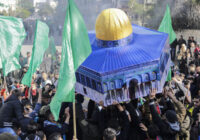
President Barack Obama’s latest address on the Middle East alarmed
the Israeli government. Prime Minister Benyamin Netanyahu had tried in
vain to have the passage deleted which envisages an emerging Arabic
state within the 1967 boundaries. Yet Obama insisted on exactly that
phrasing, which will serve as a blueprint for the borders of the future
Palestine.
Why does Obama’s frontier concept pose such a threat to Netanyahu and
his government? The assertion that Jerusalem steadfastly rules out
giving up any territory and is categorically unwilling to vacate Jewish
settlements is verifiably wrong. In 1979, Israel pledged in the Camp
David peace agreement with Egypt to evacuate the entire Egyptian Sinai
Peninsula occupied in 1967 – including the Israeli settlements. This
promise was given despite fierce domestic protests.
|
|
Read more...
|
|
|
By Lutz Lichtenberger and Peter H. Koepf
For 10 years the Americans hunted Osama bin Laden, the world’s most
wanted terrorist. They finally found him in a complex of buildings in
Abbottabad, Pakistan. That country’s military, especially its
intelligence service, the ISI, has played a particularly dangerous game:
allied with the US on the outside, infiltrated by extremists within.
From the outset it was treacherous territory for any commando mission.
The killing of bin Laden must be judged entirely from this perspective.
|
|
Read more...
|
|
|
Bin Laden is gone, his terror franchise is manageable, but the
professional fear mongers are already conjuring new devils – By Hans
Leyendecker
A specter has been haunting the world: the specter of
globally-networked Islamist terrorism. It appeared in various guises and
forms and seemed to be omnipresent.
Because ghosts are also given names to better distinguish them from
each other, this one was called al Qaeda. Some just called it Osama bin
Laden. That sounded even more dangerous.
The world has experienced many religious fanatics and dangerous
political criminals but no other absolutist dreamer sparked as much
paranoia as the mass murderer of September 11. Well-founded concern
about his alleged plans often turned into hysterical
catastrophe-mongering.
|
|
Read more...
|
|
|
Norway introduced affirmative action for women in the boardroom six
years ago. Other European countries are following suit. But does it
work? – By Jabeen Bhatti
When Norway’s Equality Minster Audun Lysbakken gathered a group of
Norway’s top 100 female leaders for a discussion on quotas for women on
boards in 2002, he split the room into two teams.
“He was dividing us up into those who were for it and those who
opposed it,” recalled Benja Stig Fagerland, an economist who was
involved with the initiative for quotas from the beginning. “Instead,
we need to be talking about how we can get more women on boards, and
why it is important for business to wake up and fish from the other
half of the talent pool.”
Still, she adds, it was a tool to get us there: “And one, of all things, suggested by a man.”
|
|
Read more...
|
|
|
 Throwing flowers to his supporters during an election rally, Prime Minister Recep Tayyip Erdogan is set to secure a third term.
A sex scandal could mean a supermajority for the ruling AK party – By Nurhan Kocaoglu
Ask any Turkish family what they are doing on a Wednesday evening,
and they will gladly fill you in on the intrigues and scandals of
“Magnificent Century,” a Turkish soap opera set in the Ottoman Empire.
In fact, most evenings there is at least one soap on TV, and it is
usually being watched by tens of thousands of Turks living in Germany,
too. But ask them about the elections and the enthusiasm dims. The usual
televised political discussions and debates on Turkey’s parliamentary
elections on June 12 aren’t as popular among the German-Turks this time
around.
|
|
Read more...
|
|
|
 A fresh start with new faces? Philipp Rösler with party vice president Birgit Homburger, leader of the parliamentary group Rainer Brüderle and general secretary Christian Lindner (front row, left to right).
Philipp Rösler took over as FDP leader, Guido Westerwelle was eased out but remains foreign minister – By Peter H. Koepf
The three-day FDP party congress in mid-May resembled a child’s
birthday party. The delegates appeared to be playing a game of musical
chairs. Virtually all of the Free Democratic Party’s top leaders managed
to find a chair when the tune stopped, even if it was not the same one
as before. Everyone except the most senior member.
Foreign Minister Guido Westerwelle is no longer deputy chancellor.
That office now belongs to his successor as FDP chairman, Philipp
Rösler, who has also made the transition from the health ministry to the
economics ministry. Merkel will now have to deal with him first and
foremost the next time the FDP wants to establish new policy goals.
|
|
Read more...
|
|
|